If you, like me, love order in a git, then Conventional Commits is just a lifesaver 😅 You don't have to guess which commit does what. Just feat:, fix:, chore: - and everything is clear. Plus, it automatically helps with versions and CHANGELOGS. Use Conventional Commits and don't make mistakes in committing names. Your future self in the repository will thank you very much 🙌 Link: https://lnkd.in/dy5tyjWR
Recommended Posts
Top 5 resources for interactive learning of Git.
1 Learn Git Branching is an interactive online resource that teaches you how to use Git in a game format. With visualizations and hands-on tasks, you can easily learn the basics of working with Git branches and commands in an engaging format. Link:https://lnkd.in/dTrYuEbw 2 Killercoda is an interactive platform for quickly getting acquainted with the most popular version control tool - Git. It provides practical experience through scenarios and a simulated environment without the need for local installation. Link:https://lnkd.in/dR_qDZwg 3 Git How To is an interactive tour that will introduce you to the basics of Git. The tour is created with the understanding that the best way to learn something is to do it yourself. Link:https://githowto.com/uk 4 Git Immersion is a step-by-step practical course that introduces the fundamental concepts of Git. Built on the principle of "to understand - you need to do", this resource allows you to master the basics of version control systems through real-world examples and exercises. Link:https://lnkd.in/dhpyGFCZ 5 Oh My Git! is an open source game designed to teach the basics of Git in an engaging game format. Perfect for beginners who want to learn Git in an interactive and fun way. Link:https://ohmygit.org/
 Viktor Svertoka·Tech·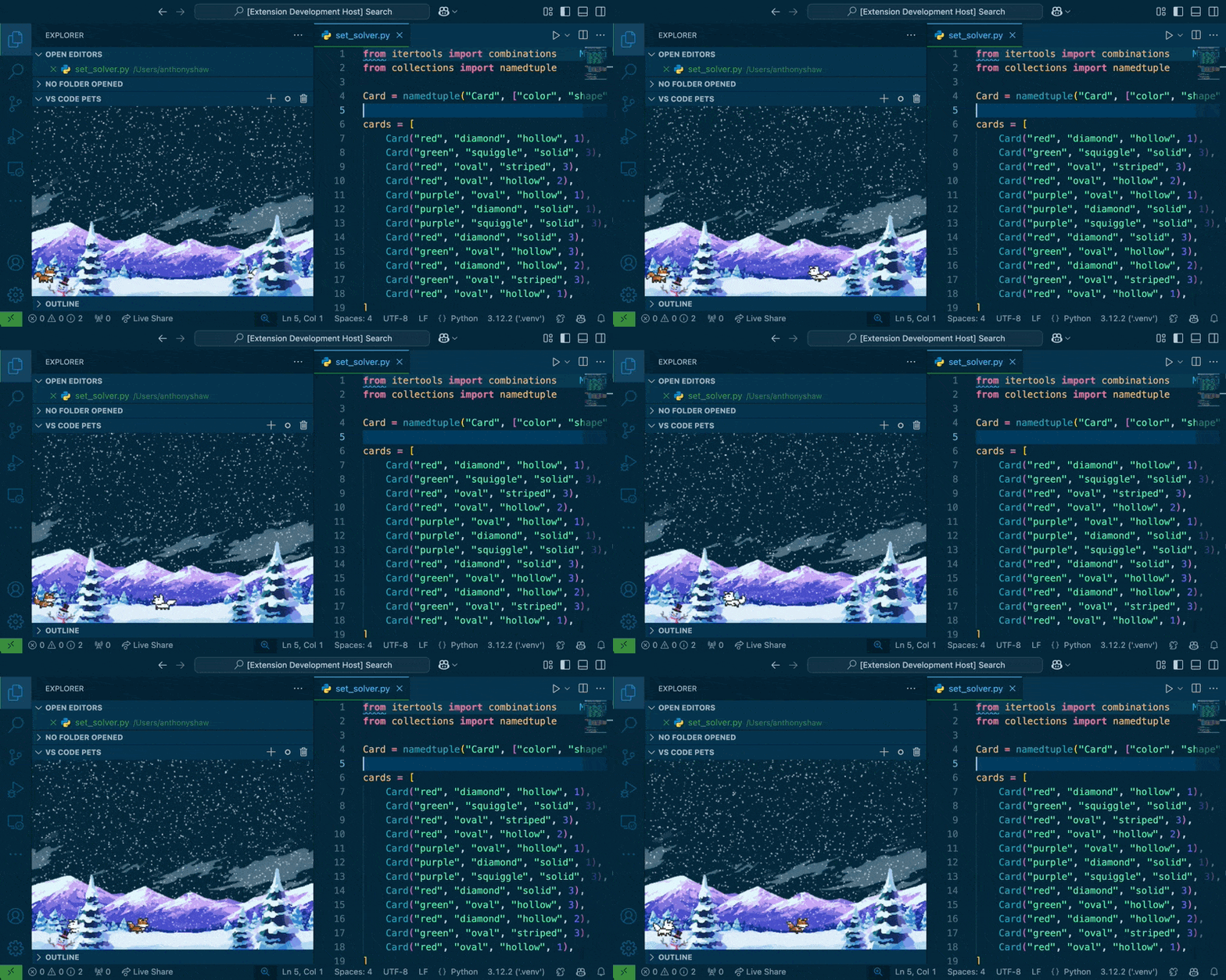
VS Code Pets
Don’t code alone in VS Code anymore. vscode-pets is an extension that adds virtual pets прямо into your editor. Link: vscode-pets Repo: vscode-pets
Viktor Svertoka·Tech·
How to prepare for an interview
An interview is an opportunity to demonstrate your suitability for the role, your interest in the company and your personality. Preparing for an interview will help you feel calm and confident on the day of the interview and answer any questions you may have. There are many ways to prepare. In this article, we will describe a few of them, and we hope that they will help you succeed in your next interview. How to Prepare for an Interview Preparing for an interview is an important step on the road to a new job. A well-thought-out plan will help you stay calm during the interview and stand out from the other candidates. Here are some steps to help you get started preparing for your interview: Review the job description Review your skills and goals Gather information about the company’s organizational structure Practice interview questions Prepare to assess your skills specific to the industry or role you’ve chosen Prepare questions for the interviewer Print out copies of your resume Prepare for your trip Develop a plan for your next steps 1. Analyze the job description Read the job description carefully to understand what skills, qualities, and experience the employer is looking for in candidates for the role. With that in mind, think about which qualities and skills you should highlight. By carefully analyzing the job description, you’ll learn more about the company as a whole and can anticipate the questions the interviewer will ask you. 2. Review your skills and goals Once you understand what the employer is looking for in a candidate, review your resume and think about the skills you are likely to be asked to talk about in more detail. You may need to explain how your professional experience and skills match the job description and the requirements of the role. Now is the time to consider how this job aligns with your future goals. How will this position fit into your career? How will it help you achieve your ultimate professional and personal goals? 3. Gather information about the company’s organizational structure A thorough understanding of the company and the role you are applying for will help you anticipate the questions you will be asked, how well you will fit in, whether you will fit into the company culture, and whether you will get along with management. Here’s where you can find the information you need before your interview: The company’s website and “About” section The company’s history, mission, and values Company social media channels; Industry news, such as press releases and articles; Professional networking platforms for both the company and its employees; Government statistics sites or industry professional sites, where you can find information on employee satisfaction and salary reports. If there are any aspects of the company that you would like to know more about, ask about them during the interview. This attentiveness will impress the interviewer and show that you are interested. 4. Practice interview questions Reviewing typical interview questions is a great way to prepare. Thinking about your answers to these questions will help you present yourself more clearly, accurately, and positively. Analyze your skills and past achievements and think about how you can incorporate this information into your answers to prove that you would be a good fit for the company. Here are some common interview questions: Why do you want this job? The best way to prepare for this question is to analyze the job description and the company’s mission statement and show how they align with your own career goals. Example: “I want to work for a company where I can make a difference and grow professionally. I feel that the company’s business ethics align with my own values.” What are your strengths and weaknesses? This is your chance to talk about yourself as a professional and as a person. List the personal qualities that will help you succeed in this job. When describing your weaknesses, focus on how you think working for this company will help you improve them. Example: “I am always eager to learn new techniques and technologies, and as a social media manager, this really helps me stay on top of new trends and modern ways to communicate with the company. I am also learning to express myself effectively, and I find the daily morning meetings that this company has are a great way to improve my interpersonal skills.” Where do you see yourself in five years? With this question, the interviewer is really asking you two things: what is your ultimate goal and do you plan to work at this company for the long term? Try to relate your ultimate career goals to the skills and experience you plan to gain in this role, and describe what senior positions you would like to hold within the company as you grow. Example: “I hope to advance from Assistant Product Manager to Product Manager within the next five years. Since a Product Manager has a
Anna·Career·